Mobile app development
Native and cross-platform apps for iOS and Android that stay fast as your user base grows.

Mobile apps people keep using
We build iOS and Android apps for consumer products with millions of users and for enterprise teams.
Offline support, push notifications, analytics and a CI/CD pipeline for frequent releases come as standard.
Our mobile work in numbers
Mobile apps we build
Native Android
Kotlin and Jetpack Compose apps for Android phones, tablets and Wear OS.
Native iOS
Swift and SwiftUI apps for iPhone and iPad that follow Apple's conventions and App Store rules.
iPad and tablet apps
Tablet layouts with split-screen, Apple Pencil support and multitasking.
React Native
One codebase for iOS and Android that still looks and feels native on each.
Flutter
Cross-platform apps from a single Dart codebase, using Flutter's widget-based architecture.
APIs and backends
Backends and API integrations that supply your apps with real-time data.
Native or cross-platform?
Go native when
The app leans on the platform: heavy graphics or camera work, Bluetooth and hardware access, Apple Pencil, widgets, or Wear OS. Swift and SwiftUI on iOS, Kotlin and Jetpack Compose on Android, two codebases tuned to each platform.
Go cross-platform when
You need iOS and Android from one codebase and one team. Flutter suits apps with a strongly branded, consistent interface; React Native suits teams that already work in JavaScript and React on the web.
Consider the web first when
Users mainly need forms, dashboards, or content, and app-store distribution adds little. A progressive web app can be the faster first step. See web platform development.
We recommend the approach that fits your performance needs, budget, and timeline, and we will say so in writing before any build starts.
What every app ships with
Offline-first sync
The app keeps working on a weak or missing connection and syncs when it comes back.
Push notifications
Notifications wired to your backend, so you can reach users with the right message at the right time.
Biometric sign-in
Face ID, Touch ID, and Android biometrics for fast, secure access.
In-app purchase
App Store and Google Play billing when the product sells subscriptions or content inside the app.
Analytics and attribution
Analytics instrumentation from the first release, with AppsFlyer or Branch attribution when you run campaigns.
Crash reporting and CI/CD
Crash reporting through Sentry or Crashlytics, and a CI/CD pipeline built for frequent, safe releases.
How a mobile build runs
Discovery
Users, platforms, integrations and the approach, agreed in writing.
Design
Flows and screens designed for each platform's conventions.
Build
Two-week increments with test builds and written status.
Store release
Built to App Store and Google Play requirements, supported through review.
Maintain
Long-term maintenance in the same contract, as operating systems and devices change.
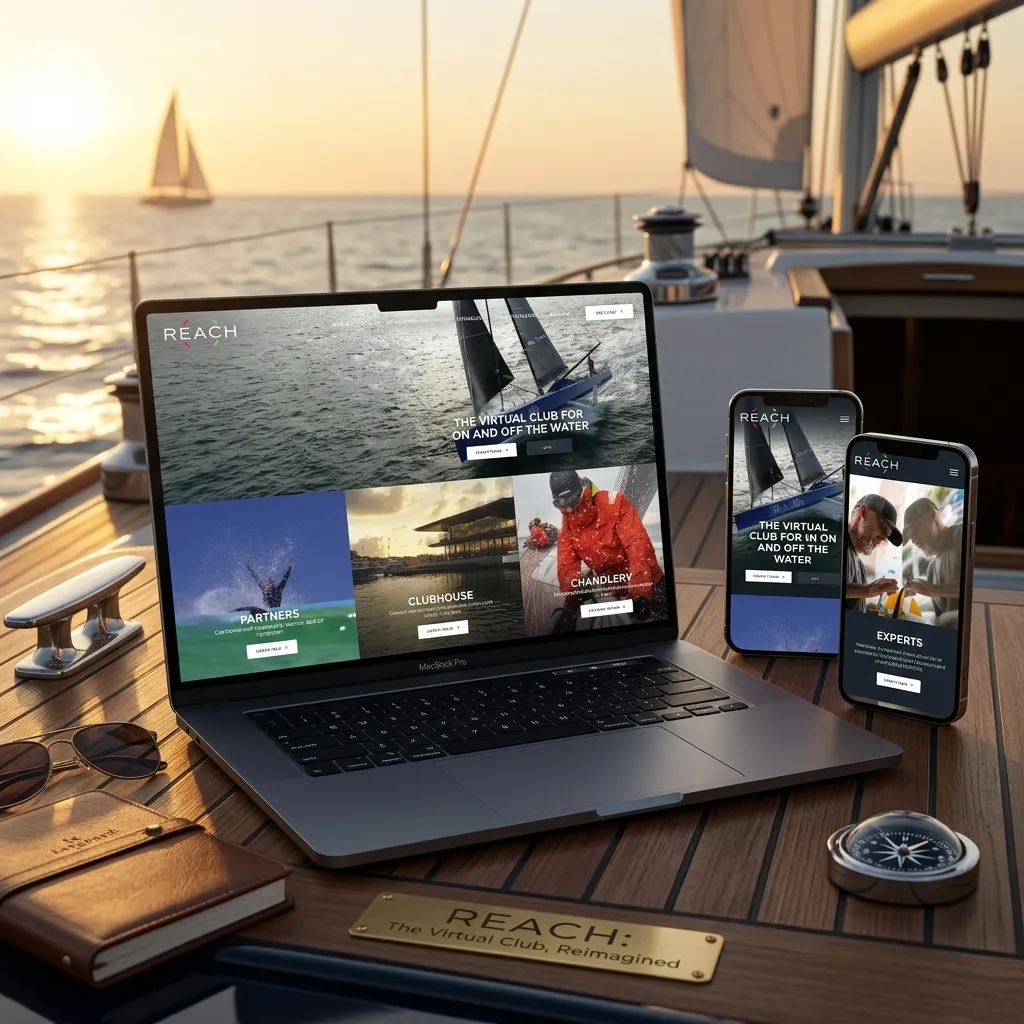
Reach Yacht Club: one platform, three apps
Reach is an international, digital-first yacht club. Its members book events, charters and services worldwide from the web and from native iOS and Android apps.
One Laravel and Node.js API backs the React web app and both native mobile clients, so membership, events and charter data stay consistent on every platform. Read the Reach case study.
Our mobile stack
Ways to work with us
Fixed-scope project
A clearly bounded build with agreed deliverables, timeline, and price. Best when the spec is settled and you want budget certainty.
Dedicated team
A team working from your roadmap on a time-and-materials basis. Best for ongoing product work where scope evolves. How dedicated teams work.
Milestone hybrid
Fixed milestones anchoring a longer build, with flexible capacity in between. Best for multi-quarter platforms.
Most long-term partnerships begin with a four to eight week paid pilot, then convert to a dedicated-team engagement.
Questions about mobile apps
Do you build native or cross-platform mobile apps?
Both. We build native iOS with Swift and SwiftUI and native Android with Kotlin and Jetpack Compose, plus cross-platform apps with Flutter and React Native. We recommend the approach that fits your performance needs, budget, and timeline.
Do you handle App Store and Play Store submission?
Yes. We build to Apple App Store and Google Play compliance requirements and support the submission and review process through to release.
Will the app be maintainable after launch?
Yes. We write apps for long-term maintainability: tested code, clean architecture, and documented build and release steps so the app stays shippable as operating systems and devices change.
Can you take over an existing mobile codebase?
Yes. We pick up existing iOS, Android, Flutter, and React Native codebases, stabilise them, and continue feature work with a senior team.
Can you add AI features to a mobile app?
Yes, when the use case actually needs them: assistants, search over your own content, or document and image understanding. We build them on the same standards as the rest of the app, with a fallback for when the model fails.